IMO, reverse bluff is possible when you give a clue to a player's hand, when everyone (including the clue receiver) knows that the card is not playable.
It's similar to the first case Jelby explained with the distant bluff.
Ex:
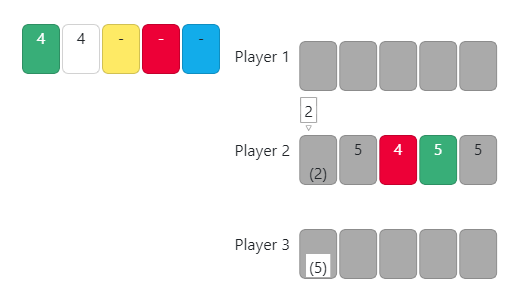
- reverse bluff.png (13.21 KiB) Viewed 484 times
Player 2 receives a 2 clue which can't be a save (no 2 in the discard pile, and btw they have the G5 to play), but they can't play it nor see anyone with a missing 1 in their hand in finesse position.
This rare case should trigger only one answer from P3, and not multiple like a layered. In this example, they would blindly play their W5 and then, reveal the bluff.
There is also what you describe (I think) Kurono, the self-canceled bluff, or some name like that:
Ex:
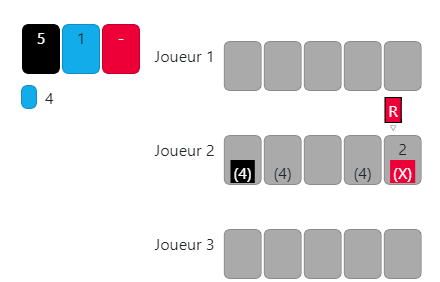
- Exemple de renversée auto-annulatrice (1).png (11.34 KiB) Viewed 487 times
Player 1 clues R to the P2's card known as 2. P2 knows they can't have the missing R1 because all their hand is neg R.
No one has R1 in finesse position, so what should P2 do ?
If P3's left most is not playable, then P2 should answer the clue themselves (playing their unknown Bk4 is this example).
If P3's left most is playable, then both answers are valid and need some arbitrary convention:
- reverse bluff is allowed in such case, and P2 should just let P3 play their leftmost. This convention doesn't fit well with layered.
- self-canceled bluff prevails in such case, and P2 should give a blind play. Note that this would not be the best timing to give such a clue, when P2 may like to bluff/finesse the P3's leftmost card.
- forbid such clue in such situation, because there is no logical answer


